The Legal Journey
Learn about the legal, social, political, and philosophical journey towards legal homeschooling in the United States.
The Legal Journey
The Lessons of H.R. 6
For eight days in February, 1994, the home schoolers of this nation gave Congress a lesson on the power of grassroots politics it is not likely to forget. It began when an amendment was introduced to H.R. 6, an enormous education reappropriations bill, which would have required all teachers in America to be certified in each and every course they teach. (See article on “The Battle of H.R. 6.”) This provision would have encumbered public schools—especially small public high schools. It would have seriously interfered with America’s private schools. But for home schools, the provision was the political equivalent of a nuclear attack. America’s home schoolers astonished Congress with a political counterstrike that was quick, effective, massive, and decisive. There are three central reasons why the home schooling community was able to respond in this manner.
Marking the Milestones: Historical Times
This timeline highlights the important milestones in the fight for homeschool freedom in the United States.
Homeschooling Is Legal: A Brief History of Home School Legal Defense Association
This article, written in 1998 on the fifteenth anniversary of Home School Legal Defense Association (HSLDA), chronicles HSLDA’s growth.
HSLDA: Our History
Although HSLDA has changed over the past 30 years—in terms of the size of our membership and staff and our physical location—our original vision and purpose remain unchanged. HSLDA exists expressly for the purpose of advocating family and freedom.
A Fifteen Year Perspective
When Michael Farris and Michael Smith founded Home School Legal Defense Association in March of 1983, home schooling was just a tiny blip on the education radar screen. The concept of parents teaching their children at home was relatively obscure, and the families who chose to follow this non-traditional education route were fairly certain to face opposition from the educational bureaucracy and following legal entanglements, as well as from their own friends and family.
The Politics of Survival: Home Schoolers and the Law
Twenty years ago, home education was treated as a crime in almost every state. Today, it is legal all across America, despite strong and continued opposition from many within the educational establishment. How did this happen? This paper traces the legal and sociological history of the modern home school movement, and then suggests factors that led to this movement's remarkable success.
The Good, The Bad, The Inspiring
A look back at the history of the Home School Lega Defense Association with Michael P. Farris, J. Michael Smith, Christopher J. Klicka, and David E. Gordon. Hear about the early years of HSLDA, the way home schooling has changed, and some of their most memorable cases.
On the Edge of the 21st Century
The right to home school is based on two fundamental principles of liberty: religious freedom and parental rights. Whenever one of these two freedoms is threatened, our right to home school is in jeopardy. Here are the battles we think home educators will be facing as we enter the next century:
The Battle of H.R. 6
House Resolution 6 of 1994 was a reappropriations bill for the Elementary and Secondary Education Act (ESEA). Ordinarily such bills deal with public education and would have little, if any, impact on home educators. But that year, a few small wording changes affected thousands upon thousands of home schooling families, and resulted in over a million phone calls to Congress.
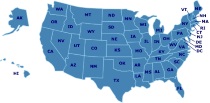
Looking for Another State?
Featured Resources
As an Amazon Associate, we earn from qualifying purchases. We get commissions for purchases made through links on this site.

Educational Travel on a Shoestring : Frugal Family Fun and Learning Away from Home
Educational Travel on a Shoestring shows parents how they can help their children learn–and have a blast–while traveling. From researching destinations to sharing activities that both teach and entertain, this priceless guide offers practical information for parents who want to have more fun with their kids, build closer family ties, and enjoy richer educational experiences–all without spending a fortune.

Basic Montessori: Learning Activities for Under-Fives
For the first time, Basic Montessori opens the celebrated philosophy and method to a more general public. David Gettman has devised a clear and modern explanation of Montessori's revolutionary ideas about early intellectual development, and provides a step-by-step guide to the Montessori learning activities most commonly used with under-fives. These include activities for introducing reading and writing, counting and decimal concepts, science, and geography, as well as activities that help dev...
Learning Language Arts Through Literature
Learning Language Arts Through Literature is a fully integrated language arts program that teaches grammar, reading, spelling, vocabulary, writing mechanics, creative writing, thinking skills and more.

Designing Your Own Classical Curriculum: A Guide to Catholic Home Education
In this book, Laura Berquist offers a curriculum based on the philosophy of the classical Trivium: grammar, logic, and rhetoric. This valuable tools helps home educators craft a liberal arts curriculum that is good for both the soul and the intellect. The material in the book covers grades K-12 and has detailed and practical advice. There is also a section for a high school curriculum and a list of resources.
Christian Kids Explore Chemistry
These user-friendly, unabashedly Christian, one-year science curriculums for elementary students include teaching lessons, coloring pages, hands-on time, memorization lists, review sheets, creative writing assignments, and a supplemental book list. The Chemistry text is intended for grades 4-8, and includes such hands-on activities as making model atoms, breaking covalent bonds, and making gas expand. It also lists chemistry terms, notations, and rules. The conversational style gives students th...